



10 Automotive Chatbot Examples That Help Car Buyers in 2026
Explore 10 practical automotive chatbot examples for vehicle search, trade-ins, finance, test drives, service bookings, WhatsApp and human handover.
 Iranthi Gomes · CEO & Co-Founder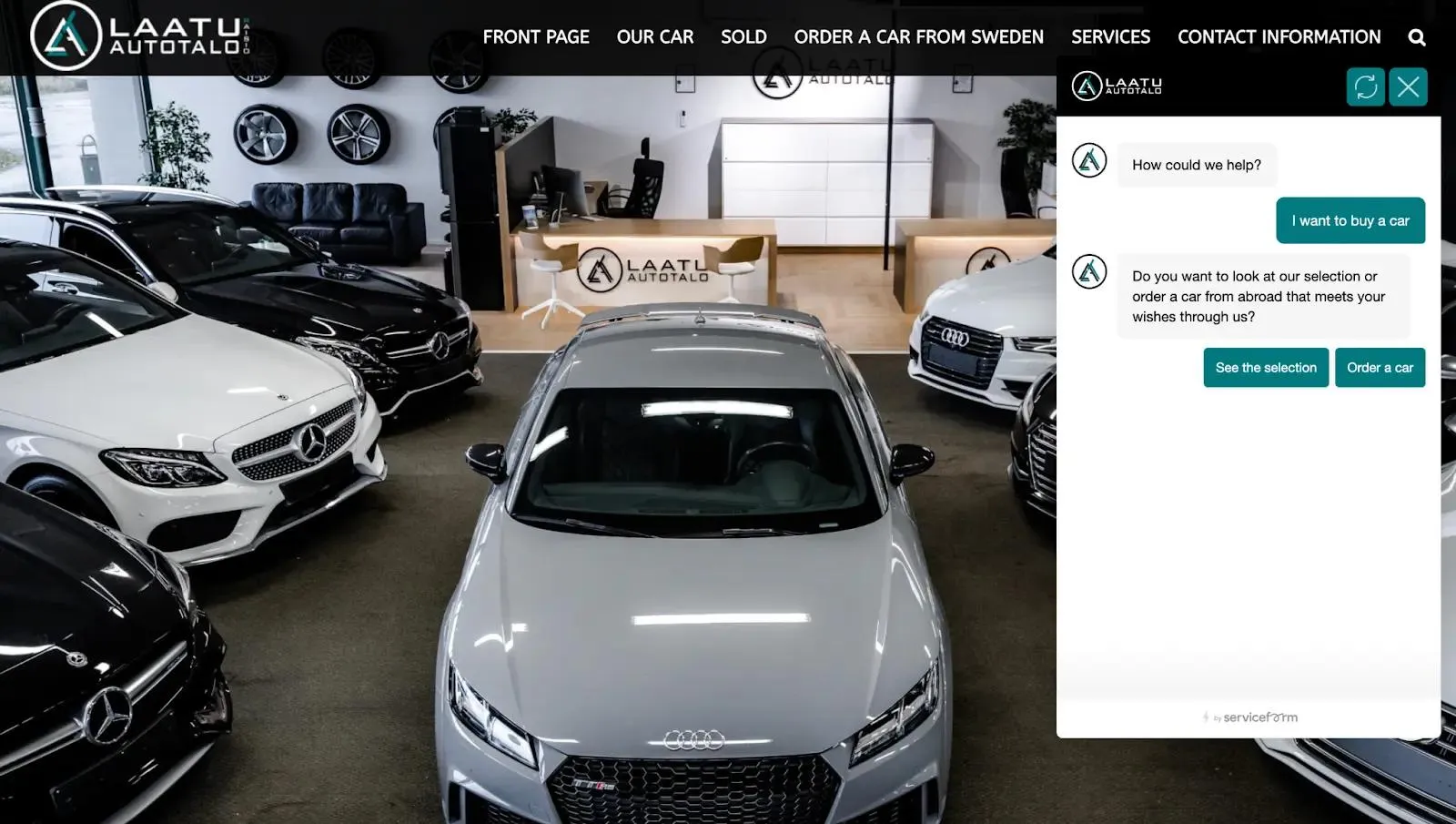
A useful automotive chatbot does more than ask for a name and phone number. It helps a buyer take the next step: find an available vehicle, understand a budget, prepare a trade-in, book a test drive or reach the right salesperson.
These ten examples are not a ranking or a promise of universal results. They are practical journeys we have seen on European automotive websites. For a deeper guide to inventory discovery, read how AI car search works for dealerships.
1. Search live vehicle inventory in natural language
Buyer question: “I need a five-seat hybrid SUV under €35,000.”
The chatbot translates the request into criteria, checks the live feed and presents vehicles that are actually available. If no vehicle matches every condition, it explains the trade-off instead of returning an empty page.
This is especially useful when inventory is large or the buyer does not yet know the make and model they want.
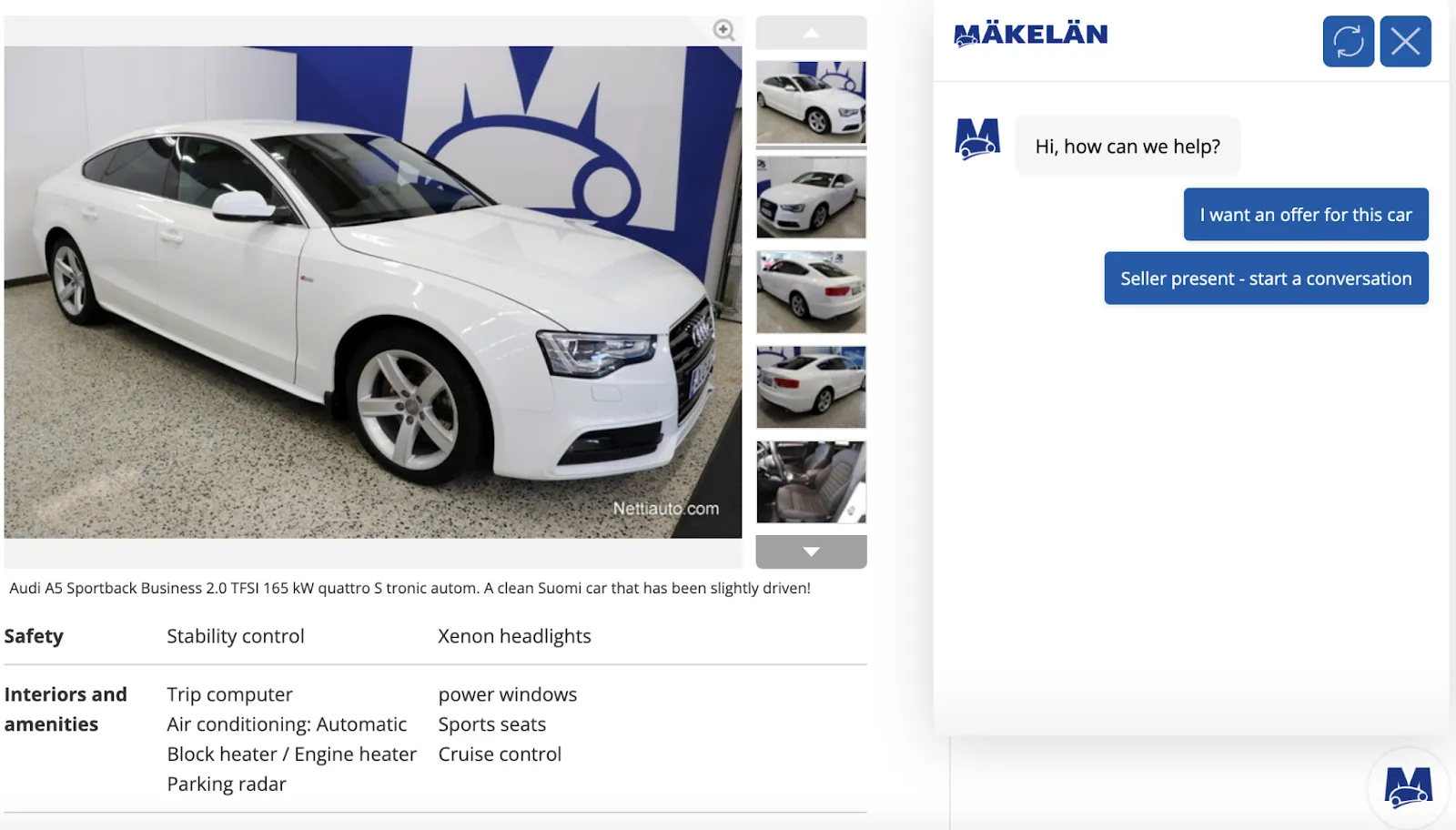
2. Answer questions on a vehicle detail page
Context matters on a listing. The chatbot should know which vehicle the visitor is viewing and answer from the approved inventory data, including mileage, equipment, available history and sale status.
A helpful response is not just “leave your details.” It might ask: “Would you like to check an option, estimate a trade-in or book a test drive?”
If a field is missing, the chatbot should say so and offer a human handover. It must not invent a specification.
3. Qualify a trade-in enquiry
The chatbot can collect the make, model, year, mileage and registration of a vehicle offered in part exchange. It then sends a structured enquiry to the salesperson.
An automated estimate should not be presented as a firm offer. Condition, history, inspection and local commercial terms still matter.
4. Explain finance inputs without replacing an adviser
Many buyers think in monthly budget rather than vehicle price. A chatbot can collect the intended deposit, term and monthly range, then show options according to the dealership’s approved rules.
It must distinguish an indicative calculation from a credit decision or binding offer. Pricing, rates, representative examples and required disclosures should come from the dealership and its finance provider.
5. Book a test drive
A short test-drive journey asks:
- Which vehicle would you like to drive?
- Which dealership location?
- Which available time suits you?
- How should the appointment be confirmed?
If the bot writes to a live calendar, it can confirm the slot. If it only sends a request, it must say that clearly so the customer does not assume the appointment is final.
6. Route the buyer to the right salesperson
A multi-brand or multi-location group should not send every conversation to one queue. The chatbot can use the vehicle, brand, location and reason for contact to select the responsible team.
When a person joins, they should receive the listing viewed, answers already given and contact details the buyer agreed to share. The buyer should not have to start again.
At Saka, live chat supported by automation outside opening hours more than doubled website lead volume. That is the result of one named deployment, not a market benchmark. Read the Saka customer case.
7. Book workshop and maintenance visits
Aftersales needs its own journey. The chatbot can identify the vehicle, mileage, requested work and preferred service location. A photo or short description can help the workshop prepare.
Safety concerns and recalls should route to official manufacturer or regulator information, not an improvised AI answer.
8. Compare vehicles already viewed
“Which one has the larger boot?” and “What changes between these two trims?” are natural questions after a buyer has opened several listings.
A chatbot connected to approved product data can compare the vehicles and state which criteria shaped the answer. A missing specification should trigger a clarification or salesperson handover, not a guess.
9. Continue the conversation on WhatsApp
A buyer can begin on the website and choose to receive the summary or appointment confirmation on WhatsApp. The relevant context should follow: vehicle, location, need and consent.
The channel does not remove data-protection or messaging-policy obligations. Collect only what the journey needs, explain its purpose and respect the rules for templates and opt-outs. See Serviceform for WhatsApp.
10. Hand over between AI and live chat
AI can handle common questions and structured tasks. A salesperson should take over for negotiation, a sensitive situation, an exception or whenever the buyer asks.
The useful metric is not how many conversations the AI keeps. It is whether the handover gives the salesperson enough context to help. Serviceform Live Chat keeps the conversation available when a person joins.
What named automotive cases show
These journeys exist in different combinations:
- Saka used live chat and after-hours automation.
- Moberg Bil started with a simple chatbot and expanded it.
- Gedauto connected conversational qualification to its sales process.
- Unione Movilidad separated homepage and vehicle-page journeys.
These are customer stories published by Serviceform, not independent audits. Each result belongs to that customer’s traffic, implementation and measurement method. The shared lesson is operational: design the chatbot around the action the buyer is trying to complete.
Explore Serviceform for automotive dealerships and Mira AI to see how search, qualification and handover fit together. If you are selecting vendors rather than designing use cases, use our separate 2026 automotive AI conversation tools guide.
Frequently asked questions
What is the best automotive chatbot use case to start with?
Start with the most frequent high-intent need on your site. For many dealerships that is checking availability, asking about a specific listing or requesting a test drive. One short journey connected to real inventory is more useful than ten generic scripts.
Can an automotive chatbot value a trade-in?
It can collect the required details and show a clearly qualified estimate if your process supports one. A final offer normally depends on inspection, history and commercial conditions.
Should a dealership use AI chat or live chat?
They serve different moments. AI provides immediate guidance and handles repeatable tasks. Live chat gives the buyer access to a person when judgement or a commercial decision is needed. The handover should preserve context.
How do you prevent invented vehicle answers?
Connect the chatbot to controlled data, restrict answers to available sources, expose the source when useful and create a human fallback. Missing information should produce a clarification, not a confident guess.
What personal data should the chatbot collect?
Only data needed for the stated journey. Explain the purpose and retention, control access and provide a route to exercise data rights. Have your privacy owner or legal adviser review the setup.
Sources and review method
This article was reviewed on 16 August 2026 against the named Serviceform customer cases above, the current Serviceform automotive product page and the European Commission’s data-protection guidance. Product capabilities should be tested with your own inventory, CRM, locations and appointment process before purchase.